Showing posts with label Reading Diary. Show all posts

Tuesday, April 5, 2016

Week 11 Reading Diary Extra: Mr. Miacca

The lesson that should be learned it to learn from your mistakes. Not everyone can be as lucky as this young boy and get away with his life twice.

IN the story of Mr. Miacca, it tells of a bad boy who goes where he shouldn't (around the corner) and is taken by Mr. Miacca. Now Mr. Miacca eats and boys for supper. The boy had even been warned not to go around the corner for Mr. Miacca would take him. Surely enough this had happened. When the boy was taken though he was clever enough to escape and was free.

Once the boy escaped from Mr. Miacca he was good until one day. The boy went around the corner yet again and was snatched up yet again by Mecca. I do not know how but the boy once again tricked his was out nd was free. After the SECOND time, the boy thankfully learned his lesson. The boy was good from then on.

If I were to change up with the story I am not sure If I would let the boy get away with what he did for the second time. You think after almost being cooked up for supper that you would learn your lesson. I have to give it to the boy though he had some guts to go there again. Also, the boy was very clever with escaping two times from Mr. Miacca. In my opinion, he was very lucky and had the help of his cleverness.

From the Story Mr. Miacca


Overall lesson, stay out of trouble and do not wonder where you are told not to. Especially when the consequence in being taken by Mr. Miacca and being eaten for supper! Haha this could come in as a handy story to tell children to stay out of places they shouldn't be. 

Story unit, English Fairy Tales. Story, Mr. Miacca by Joseph Jacobs with illustrations by John D. Batten (1890). 

Monday, April 4, 2016

Reading Diary Continued: Accumulative Stories

For the second half of the reading unit: Nursery Rhymes I choose to highlight the Accumulative Stories. Unlike the rest of the unit that is mostly short stories, short as three lines. The accumulative stories start off small and gets added to. I found this section interesting to read.

The first story is, This Is the House That Jack Built. It starts off with just two lines. Then each breaks it adds another line. Each new line is a new part of the story. In the eleventh break, it had eleven lines, that wrap up the whole story. I think this is the fun way to tell a longer story in the form of a rhyme.

In this unit, there was another rhyme that started off with a key of the kingdom. Then in each line, the story was broken down. For example, the next line was "In that kingdom there is a city." Then the next line told of how in the city there was a town. I think this could be a fun rhyme to add on to of mix up. One idea would be to state the origin line then add another small story for each line. Or you could start off with something small and tell a story line by line of where it ends up.


The other type of accurate story was none were they used a few lines to tell a story then had a small rhyme. For example, a small story was told with about 3 to 6 lines. Then there would be a break with a small rhyme. Then a line would we wrote to tell where the story was headed. Then another rhyme. This is a creative way to combine a story and a rhyme. I though it was more entertaining to read than just a solid story or a long rhyme. It was the best of both worlds.


Photo found in Nursery Rhymes Unit


Story unit Nursery Rhymes unit, section Accumulative Stories. By, Andrew Lang and illustrated by L. Leslie Brooke (1897).

Reading Diary Week 11: Rhymes and Riddles

Reading from Unit- British Nursery Rhymes

One of my favorite sections form, the first half of the Nursery Rhymes was the proverbs section.

--------
Nature required five
Custom gives seven!
Laziness takes nine, 
And wickedness eleven. 

[Answer: hours of sleep]
--------
Not only was this little rhyme clever it was also a little. Short, sweet and simple. Yet at the same time I had no idea what the answer was until it was given below.

----------
A MAN of words and not of deeds,
Is like a garden full of weeds;
And when the weeds begin to grow,
It's like a garden full of snow;
And when the snow begins to fall,
It's like a bird upon the wall;
And when the bird away does fly,
It's like an eagle in the sky;
And when the sky begins to roar,
It's like a lion at the door;
And when the door begins to crack,
It's like a stick across your back;
And when your back begins to smart,
It's like a penknife in your heart;
And when your heart begins to bleed,
You're dead, and dead, and dead, indeed.
The rhyme above was one of my favorites. Just in the first two lines; a man of weeds is like a garden full of snow. I took the interpretation as a man that only speaks and does not fulfil his deeds, is like a garden full of snow. The beauty of the flowers just like the words is covered or hidden. Just like by the snow. 

Another one of my favorite sections from the rhymes unit was they rhymes and riddles. I like to think I am good at figuring them out but really I am not. 

One of the riddles I had heard before....

Little Nancy Etticoat
In a white petticoat
nd a red rose
The longer she stands
The shorter she grows. 

The answer is a candle. 

I really look forward to creating one of my own riddles or rhymes.

As I continued to read through this unit I came across Peter Piper. I remember trying to say this rhyme as fast as I could with my friends when I was in elementary. Just on case you wanted to try I'll write below.
-------
Peter Piper picked a peck of pickled peppers;
A peck of pickled pepper Peter Piper picked;

If Peter Piper picked a peck of pickled pepper, 
Where's the peck of pickled pepper Peter Piper picked?
------------
When I used to write stories as a kid I would try to place the same word adjectives together. Such as super shiny sun. I remember it made it more exciting to write my papers and better to read. 

I believe I enjoy reading these rhymes and riddle because not only are they fun and challenging.  They also bring back many childhood memories. They also make me wonder how they were ever written. I know many come with a lesson or teaching in them. Others I read and just wonder what in the world is this supposed to mean? Ha I look forward to reading more from this unit.


Story unit Nursery Rhymes unit, section Accumulative Stories. By, Andrew Lang and illustrated by L. Leslie Brooke (1897). 


Monday, March 28, 2016

Week 10: Reading Diary Continued: The Spirit Land

Story from the Great Plains unit, The Spirit Land. By Katharine Berry Judson (1913).

When I first read the title I was anticipating a story about a spirit world/land. That the story would bring the reader to this place. That's what I get for guessing about an Indian tale.

The spirit world is toward the Darkening Land that was located higher up. The story is told that when the spirits come back from this world the Crow is the leader. This is because the Crow is black in color like the Darkening Land.

As for the people they were in the living world, the Sunrise Land. The Crow decided that he would bring different worlds together. Crow had taken a pebble with his beak and dropped in into the water. The pebble became a mountain! This allowed the Indians to come down the mountain side to the edge of the water.

Crow flying above water: Wikimedia.com
Crow's next step was to take dust and drop it into the water. The dust became solid land! This land had stretched from the spirit land to the living world.

The next step Crow made was taking blades of grass. When he Crow dropped the grass new land was made!

The last step, Crow took twigs in his beak. When Crow dropped them it covered the new earth with a forest of trees.

Thanks to Crow the Indians have a new world to live on!


When I read this story it made me think of the story of the beaver and the Coyote. They had an epic battle that they fought so hard they created the great lakes. Kind of like hoe Crow created this new earth. It also reminded me of other creation stories from different tribes.

I tend to really enjoy the creation stories from all different units. I like how it wasn't the people who created the world. It is usually animals that do. One of the reasons I like to believe the Indians have such a strong connection with the animals. As well as with the plants and rest of nature around them. They all work together and live in harmony.

Week 10 Reading Diary:

When reading the story of The Legend of the Peace Pipes, I found myself asking many questions! For myself as a reader, this is a good thing. What would the fun in reading a story be if you always knew the mystery?

The story of the Peace Pipes would never be one I would guess. I was wrong with every guess I made but one. When the different eagles started flying above the cleared circle. I had made a guess that we would land upright, pointed out of the ground. Surely enough, one had, from the eagle with the fantail. That part was a bit unexpected. I though it would have been the bald eagle.
Wikipedia: Peace Pipe Circle
In the end, it also tells of how that eagle and feathers from the owl and woodpecker are used to make the piece pipes. The peace pipes were then used to form relations with other tribes.

I had many other questions when reading the story. One was why did only the owl and woodpecker call out to the Indians? In the story, it says the owl called out to offer then his aid. What aid did he bring, though? I still wonder this.

Overall my favorite part of the story is how the animals helped find the right sapling and bark. Mainly the eagles that flew from above and dropped their feathers in the middle of the circle clearing.


Story Source: The Legend of the Peace Pipes. Unit Great Plains. By Katharine Berry Judson. 

Monday, March 21, 2016

Week 9: Reading Diary extra credit: The Cloud That Was Lost

Just like all people and living things, clouds also need rest. Be careful where you wander though because you might now come back.

The story of The lost cloud is just as it sounds. It's about a cloud that got lost. The clouds would come down at night to rest. They would place themselves in mountain tops and tree tops. This is why there is fog. One day a little cloud was chasing his tale and ended up far from any other clouds. As night fell the little cloud as very tired. There was nothing but an open field below.  The cloud couldn't take it so the cloud laying down on the field. Below he was a white flower that was tired of begin white. The cloud had a light pink/lavender color. The flowers took their chance and drank from the cloud. They did so until there was no cloud left.

So we are left with the story of how the flower known as the phlox got their soft color.


Phlox: From the story The Lost Cloud

Story from: Tejas Legends Unit: The Cloud That Was Lost By, Berniece Burrough (1936) 


My favorite part of this story is how the flowers got their color. I like how in many Native American stories everything comes from something already. Such as the flower got their color from the cloud. 

I also wanted to highlight the story, How Sickness Entered the World. In the beginning, there was no sickness. People lived a healthy life unti\ll they grew old. One day the old medicine man fell dying, The Great Spirit decided that he would send a messenger down so the man could share his wisdom. Yet, the old man was too weak to meet the messenger. So he sent to young boys to meet the messenger. When the boys were waiting they saw a snake. In fear, they attacked and killed the snake. Then they continued to wait for the messenger. He never came and the boys went back to tell the medicine man what happened. The medicine man was raged for they had killed the messenger (the snake). The medicine man told them there would be great trouble ahead. That night the mate of the snake come into camp and laid eggs everywhere. When the eggs hatched each snake carried a sickness into the world. This was how sickness came into the world. 

I liked this story because it shows that with every action you take there will be consequences. Also, that thing are not always as they seem. Such as the messenger being a snake. 

Week 9 Reading Diary Continued: Origin of the Tribes

The Creation of the Tribes (Chinook) from the Pacific Northwest unit

I always find it fascinating  how Different Indian's have creation stories. From most of the creation stories I have read, they start with animals. I find it that this could be a reason why Indians respect animals so much. Maybe another reason why they see then as an equal, Instead of superior to.

In this creation story, it started out with a monster beaver and a coyote. In Lake Cleellum. They story is told of how animal people would try to fish in Cleellum but Wishpoosh the beaver would drag them down to the bottom of the lake.

One day the Coyote the wisest and cunningest of them all decided he would change this. He went fishing in the lake but his pole was no ordinary one. Coyote had fastened a spear to his wrist with a strong cord. When Wishpoosh attacked him the coyote speared the beaver. Then Wishpoosh dragged him to the bottom of the lake. Yet, the coyote would not go down without the fight for his life. The two had an epic battle. They fought and fought dragging each other through the water.

The two had fought so hard that they began to tear out the banks of the lake. Water began to rush through the mountains. With each stop, that coyote and Wishpoosh made a lake was formed. Then when they started back up again in motion a new bank was torn out. Water flew downstream. The water then rushed down to a meeting place, of the Yakima, the Snake, and the Columbia Rivers,

Coyote was beginning to get short of breath. He would not stop fighting, though. He had to take down Wwishpoosh. This is when coyote reminded himself of who he was, cunning and wise. Coyote turned himself into a branch. He drifted toward Wishpoosh and then he was swallowed. Once inside of Wishpoosh he changed back into a coyote. Coyote took his knife and cut the inside of Wishpoosh.

Coyote was very tired and Muscat came to help him. The two tore apart and Wishpoosh and threw the pieces over the land. The creation began with each piece.

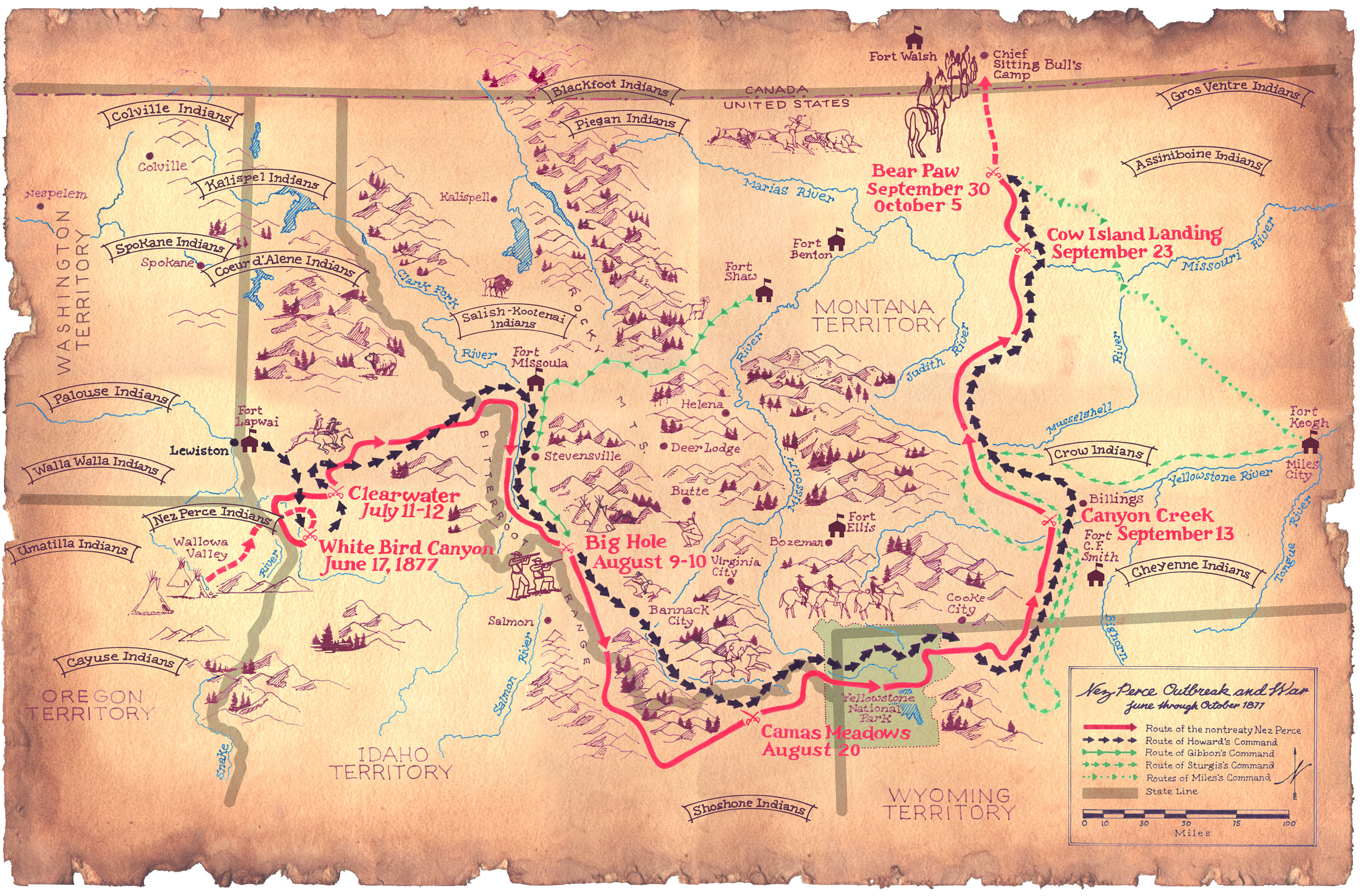
From the Head of Wishpoosh Coyote made the Nez Perces- Great in Council 
From the arms, he made the Cayuses- Powerful with a bow and war club
From the legs he made the Klickitats- Famous runners 
From the ribs, he made the Chinooks- Short, fat people
Map of Nez Perce, found on Wikipedia


With each piece of Wishpoosh, the monster beaver coyote made a tribe. He created something that would level the playing field. He created the Tribes of the Pacific Northwest.

This story gave me some create ideas for when I rewrite my creation story of the Cherokee Indians for my storybook. It also started off with two animals in a fight. In this creation story, I liked how with each piece of the killed (sacrificed) animal something was created! There is never any waste.

Story from the Pacific Northwest unit: Origin of the Tribes by Katharine Berry Judson (1910)

Week 9 Reading Diary: Ashish

Ashish was the one who always shot straight. 

Story from Pacific NW: The Story of Ashish

I enjoyed this story and choose to highlight it for its tale. The tale how certain characteristics will reveal one's true identity. In the beginning, it told how when each one was to gamble they would build a fire. AShiish's for was a purple-blue. The sly silver fox's fire was only yellow.

They story goes on of how gamblers are placed and, in the end, Ashish always wins. The others are out of things to bet by noon and return to their lodges. As the story goes on it tells of how the silver fox tricked Ashish into climbing a tree to hunt an eagle. Yet, when Ashish climbs up the tree it grew higher and higher up. When he reached the top he only found young eagles. He knew he was tricked. He grew very weak and turned into bones.

Down on the ground, the silver fox turned into Ashish, or so he tried to. Shortly after AShish's wives knew he wasn't Ashish. They told the other gamblers and asked the so-called Ashish to shoot. Claiming that Ashish always hit the target and shoots straight. He missed his mark. Then they really knew something was up. The next step was to have the so-called Ashish build his fire. Once he did it burned only yellow and the true identity was shown.

I liked how the moral of the story was that the ones who really know you will found out. They care about you and can tell when something is wrong. It also shows that each and every person is a unique individual. It also helped that in the story everyone had a different color fire. So in the end, they were able to prove to everyone the fox was trying to be Ashish.

As for Ashish, he was found by butterflies. He told them his story and they were able to nurture him back to health. They brought him up food and water. Then they carried him back down to the ground. In the end, everyone got what they deserved and true identity was discovered.

Story by: Katharine Berry Judson (1910) 
Ashish's Fire

Wednesday, March 2, 2016

Week 7: Reading Diary Continued: The Miraculous Mirror

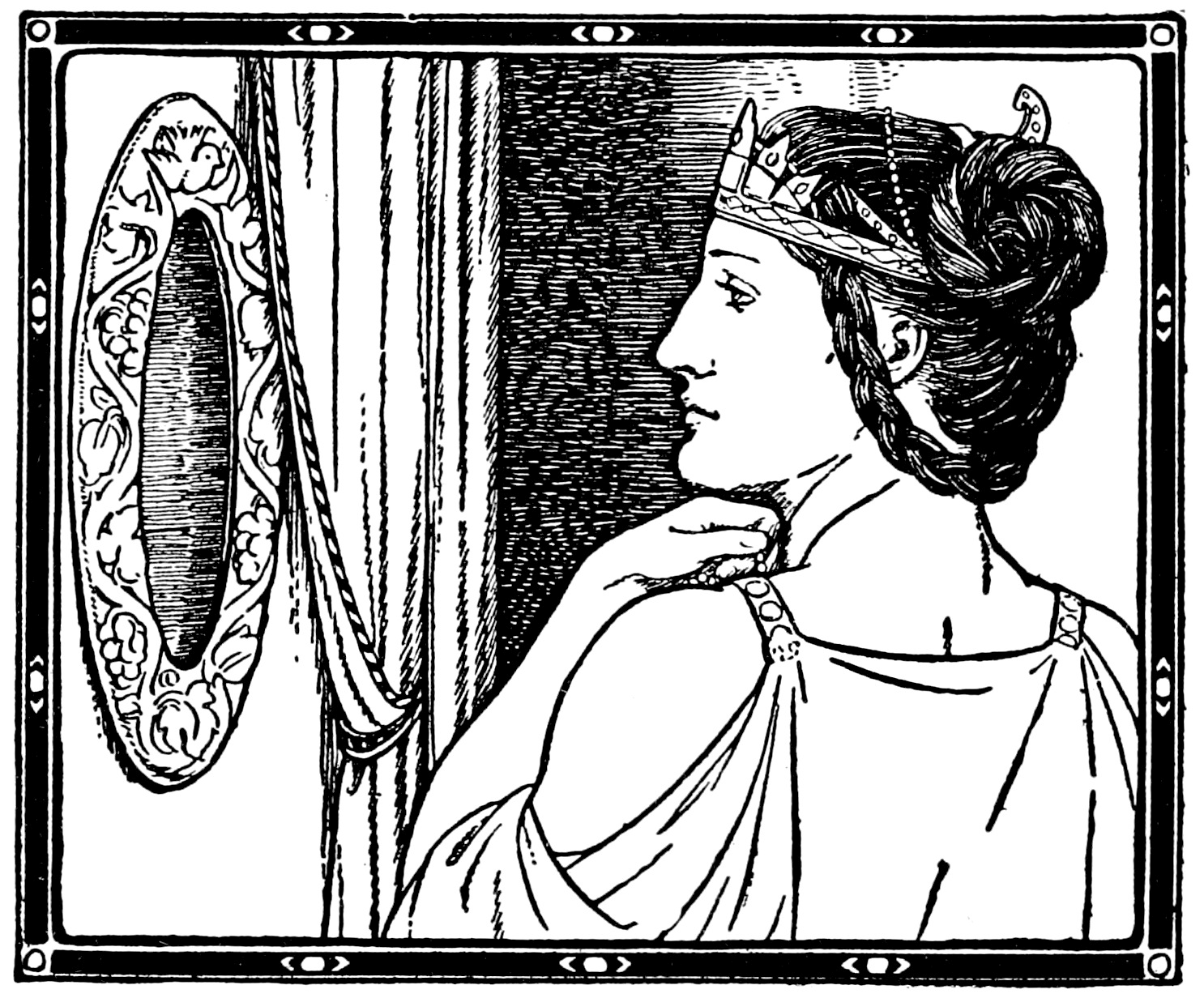
Highlighted story The Miraculous Mirror by E.W. Champney and F. Champney (1917)

I choose to highlight this story because while reading it I felt a sense of urgency and excitement. I also took note that there were some great words used to describe things. Such as; rapturous, inner weft, firmament, auspicious, boisterous, and bountiful. I think the writer did a great job of using these words. It really adds to the detail of the story. I have learned that a few of the right strong words are better than a lot of little words. You can tell a great story with only a few words.

This is something I would like to work on. I am still struggling with the maximum length when writing my stories. I think that if I chose better words for descriptions it can help. One of my new goals is to create shorter stories. I want to be able to write a short story but still have great detail and a powerful message to it.

I also enjoyed that even though this story was just about a mirror there was a lot going on. I noticed that the mirror was never really mentioned until the very end of the story. Also, the Mirror is in the story title, it is the title. I like that the title doesn't really give anything away. The title lays at the very end of the story. I used to have a lot of trouble coming up with a title. I used to never come up with a title till the very end of the story. In a way, this helped me come up with a better title. Recently though I have been looking at pictures and basing my story from that. Just the same as with basing my story from my weekly readings. Now, I come up with a title and base the rest of my story from the title.

Miraculous Mirror: Wikipedia

Sunday, February 28, 2016

Week 7: Reading Diary, Continued: Notch, Son of Li Dsing.

The second half of the reading was a continued story of Sun Wu Kung. My favorite story from the second half was Notch, Son of Li Dsing. This story was intense and exciting to read. It was a battle I was waiting for to happen. I also think this story is when a greater plan takes place.

In the previous story, Sun Wu Kung was summoned to Heaven. The Lord of Heavens apointed his as stablemaster. When first reading this story my thought was that this was to keep Sun Wu Kung out of trouble. He was first brought up to Heaven because he was becoming a rather evil dictator. Sun Wu Kung had too much power for his own good you could say. In heaven, the time was different than on earth. Sun Wu Kung soon found out that stablemaster was not a high authority position and became infuriated. He left the HEaven and went back to his apes. They through him a feast and welcomed him back.

Once the Lord of Heavens found out about Sun Wu Kung's absence he sent Notscha for him. He wanted Sun Wu Kung to be captured and put in prison. This is when the battle took place. There was shapeshifting involved as well as trickier. It kept me close to the story and on edge. In the end, Sun Wu Kung was too much. He was too strong to be beaten in battle. Then the Evening Star came into the story. It was said that no one was a match for Sun Wu Kung.

After the Lord and the Evening, star confessed they decided they would have to take in Sun Wu Kung another way. They had to be smarter than he was since they couldn't beat him in battle. They came up with the idea to give him an empty title of Great Saint.

After reading this story I was left wondering what would happen left. Most of the other stories kind of mellowed out and they just started back up into a new story. This story though left you with a hook at the end. It made me jump into the next story to find out what would happen. I was left asking myself, what was the master plan? Where are they going to capture him? Or would Sun Wu Kung be too powerful and take over the Heavens?

The Heavens: Wikipedia


Story Scourse: Part of The Monkey King Unit. Story source: The Ape Sun Wu Kung in The Chinese Fairy Book, by R. Wilhelm and translated by Frederick H. Martens (1921).

Week 7: Reading Diary: The Dragon-King

I have chosen to highlight the story of The Dragon-King as well as The Dragon-Queen.

Before I read this story I expected a much different outcome. Usually, when I think of Dragons I think of intense, strong, magnificent beats. Yet in this story, they aren't much of any of those. At least, it's not described. I had made a guess that the Dragon-King would be one to fight the great Sun Wu Kung. Instead there was no fighting at all.

Sun Wu Kung was on a mission to find a weapon that would suit him. So he traveled to the Dragon-King.  The first weapons presented to Sun Wu Kung he was unpleased with or said they were to light. Even though these weapons weighed thousands of pounds. At the end of this story, the Dragon-King is left frightened by Sun Wu Kung. The story continues with the Dragon-Queen.  The Dragon-Queen had come out and mentioned that the iron bar was lying in their sea. It was also glowing which meant it was ready to be taken. The Dragon-King was arguing this. He mentioned that it was the rod the Great Yu used to order the waters and determine the depth of the sea. The King thought it couldn't be taken away. Then the Queen convinced the King to let Sun Wu Kung see it.

This is where that story became exciting and more interesting to read. When Sun Wu Kung first approached the rod it was far too heavy and large to move. He simply wished it was shorter and thinner. Then the rod became shorter and thinner! The rod would adjust size and weight with his commands. It was magical. This was a weapon than would suit Sun Wu Kung.

Dragon-King By: Combpank on Deviant Art

I found this story interesting to read because I couldn't guess what was going to happen. It always kept me hooked with the next action. I was also fascinated by such a weapon. The things you could accomplish with such a weapons are unlimited. After reading these two stories I kept asking myself how is he able to control this rod? Will someone try to take it from him? I think a good story is one that always has you asking questions. It keeps the reader excited and interested in the story. It is also more interesting when you guess wrong. The reader is then caught by surprise and interest in what will happen instead.

Thursday, February 25, 2016

Week 6: Reading Diary, Extra: Thunder and Anansi

I choose to highlight the story, Thunder and Anansi from the Africa Unit.

I enjoyed reading this story because it was always catching me off guard. I was always guessing what would happen next and never guessed right. I like it when this happened. Who likes a predictable story? Okay, maybe some people do. I also enjoyed that in the end Anansi got exactly what he deserved.

To sum up the story real quick here is what happened: 

Anansi was a father and husband and very hungry. He went out searching for food and found a tree with nuts up in it. He was lucky to find a boat and get to the bottom of the tree. Once he was at the top of the tree he dropped the nuts down to the boat. Every single nut had missed the boat through and fell into the water. Anansi couldn't go home empty handed so he dove down into the water. Once he arrived at the bottom he came to Thunder's cottage. Thunder had sympathy for this man so he sent him home with a magical pot. This magical pot would make a great meal for him and his family. Anansi was pleased and started to head home with the pot.

This is when he grew greedy and choose to keep the pot for himself. He didn't want the magic to run out. As time went on he got more plum and more plum. His family became thinner and thinner. The family knew something was up and found the pot Anansi had hidden. His wife was not greedy and brought the pot to feed everyone in the village. The pot ran out of magic though and was ruined.

Then Anansi found out and went back to Thunder's cottage. He returned with a stick this time that started to beat him for his greedy acts.


Overall, I think the story had a great lesson. It tells how when one makes an act out of greed it will come back at you. Otherwise known as karma. Anansi was given the pot because he was always out working hard hunting for food. Then he didn't want to work anymore and kept the pot all to himself. He went with his family and let them go hungry. The story was also entertaining and interesting to read.

Nuts in a tree From Wikipedia 


Story Source: From West African Folktales by William H. Barker and Cecilea Sinclair (1917)

Friday, February 19, 2016

Week 6: Reading Diary, Continued: How the Raven Saved the Hunter

From the second half of this weeks reading unit: Tibetan Folk Tales, I want to highlight the story, How the Raven Saved the Hunter

This was one of the shorter stories but it held a strong meaning. The Tibetan proverb for this tale was, "For a foolish official to speak skillful words is as difficult as for lighting to split a lump of bronze." 

In this story, a man was out in the mountains and grew thirsty. He had a cup and filled it with the water from the river. Right as he was about to drink this water a raven came rushing down and took the cup. At first, the man thought it was just by accident. He didn't think much of it at all. Then the man went to fill another cup from the river and the same thing happened. This time, the man was curious and getting annoyed by the raven. For a third time, the same thing happened and the man was not furious with the raven. The man took out his weapon and killed the raven. 

Now the man had not taken the time to think before he took action. After he had already killed the raven he stopped to think. He though that this happened three times it was no coincidence but intentional. Maybe the raven didn't want me to drink the water. Now curious the man decided to walk upstream to see where the water came from. Once he got to the top the water was coming from the mouth of a giant snake and around it lay many dead animals, skulls and bones. 

For now, the man felt foolish and hurt by his actions. He had killed the raven when the raven was trying to save his life. 

Raven Picture by, Creative Commons Attribution
The lesson from this story is to think about your actions before taking them. You shouldn't just act off of anger or one specific emotion. It counts to take the time and get the rest of the story. It may also help to stop and ask questions. 

When I was young I always thought that my way was the best way. My dad, on the other hand, was very specific about how he wanted things done. As I have grown up I have realized that certain things are done in specific ways for a reason. The reason could be to prevent injury such as stretching before a game. The reason could also be due to a past experience when something went wrong. For example, when unhitching a trailer, you should place blocked under the wheels so it doesn't roll back. I am sure before this was ever done a trailer was left wth no block and rolled away. It is always a good idea to take a step back from things and try to see the big picture. 

Story Source: Part of the Tibetan Folktales unit, Tibetan Folk Tales by A.L. Shelton with illustrations by Mildred Bryant (1925). 

Week 6: Reading Diary: How the Fox Fell a Victim to His Own Deceit

This week's reading was from Unit: Tibetan Folktales.

I liked that at the beginning of every story there was a Tibetan proverb. In other words the moral or lesson of the story. From the first reading assignment, my favorite story was, How the Fox Fell a Victim to His Own Deceit.

In this story, there is a mother tiger who has a cub. The mother tiger was out one day and found a young fox, she decided to bring the fox as a playmate for her cub. The two became friends and play together every day. Another day the other tiger was out and found a young calf, she did the same and brought him home as another playmate.
Calf: By,Pezibear on pixabay

This is where the story gets interesting. The fox grows jealous of the calf and things everyone loves him more. Shortly after the mother grows ill. Before she passes she tells her son and the calf, " Although you are not of the same father and mother, yet you are brothers. I don't want you to ever quarrel, but to live happily here together, and if anyone should tell you lies don't pay any attention to them, but always be friends."

Tiger, Tiger Baby, Tigerfamile, Young, Family
Mother and Cub: By, Sponchia on pixabay


The fox came up with a plan to turn the tiger cub and calf against each other. Every morning the calf would be jumping around. While the tiger rested. This is when the fox came up to the tiger and told him that the calf was gaining his strength by jumping around to kill the tiger one day. From that day on the tiger and calf became enemies. The tiger kept a close watch on the calf. 


Then my favorite part of the story, one day the calf came up to the tiger and simply asked why he wanted to kill him. The tiger told him that the fox said you were trying to kill me. The two they found out that neither wanted to kill each other and the fox had tricked them. The two had regained their true friendship and came up with a plan to rebutle against the fox. 

The calf and the cub decided they would fake fight and have to fox watch. When they began to fight the fox got close enough that the tiger jumped onto him and killed him. Just like their mother had told the two, never let a lie come between you brothers. 

The Tibetan proverb for this story was, "Between the official and his people is confidence if the headman is skillful." 

What I took from this story is the bond between two true friends can never be broken. No matter what comes between them they will always find a way back to each other. 

Story Source: Part of the Tibetan Folktales unit, Tibetan Folk Taled by A.L. Shelton with illustrations by Mildred Bryant (1925). 

Week 5: Reading Diary, Extra: Lagoo, the Story-Teller

Lagoo. Source: Form the unit reading


I choose the reading from Unit: American Indian Fairy Tales.


Lagoo was known to be so wise that no one else could compare to him. Lagoo could understand the language of the animals and knew the secrets of the woods. He was also a huge fan to the children. He would make necklaces from shells for little girls. For the boys, he would help them make bows and arrows. He was most famous to the children for the stories he told. Lagoo could also answer all their questions they had asked; who, when why and where.

This was the first story to the unit, it follows with the story of the North wind then continues with clouds and stars. Each story is told my Lagoo the wise one.

I choose this section for more inspiration to my storybook, Cherokee myths. I also enjoy learning about the Indian ways. I liked how the introduction,  Lagoo, the Story-Teller was the introduction for this unit. It gave a good setting to the unit. For my storybook, I am doing something similar. So I found this unit's reading helpful. I think that the more details you give in the introduction the better image it sets in the readers mind.


Fire, Night, Rock, Ritual, Seminar, Wilderness
Indian Fire Photo By; LaughingRaven on Pixabay
I have gathered that it is very popular for Indians to gather around the fireplace to tell stories. In the story Lagoo,  the Story-Teller, winter was the prime time for storytelling. In many creation stories of Native Americans fire was not always on earth or at easy access. Such as the myth of The First Fire, by the Cherokee Indians. Indian are believers that each and everything creature on earth is important and had a job. They also are very close to earth and its element. 

I enjoy reading and learning about Indians and their myths because it is not the cultural norm of today. Today most things evolve around electricity, technology and money. If you read this Indian myth they didn't need any of those things. They lived on the earth and only the earth. They were self-sustaining. I appreciate the way they looked at the world and gave back to it what it gave to them.    I am also a fan of animals and I think it would be interesting to go back in the old times of the Indians when they held very close relationships with animals. There is also another myth on the creation of medicine. This myth is called, Origin Of Disease and Medicine also from the Cherokee. It tells how there was an imbalance with the humans and animals so the animals brought thickness to the humans. The humans had also been kind and loving towards the plants, though. So in return, the plants offered them medicine from their leaves, berried and herbs. Anything the Indians needed they could find naturally on earth. 


Story from: American Indian Fairy Tales unit. Sorce: American Indian Fairy Tales by W.T. Larner, with illustrations by John Rae (1921).


Monday, February 15, 2016

Week 5: Reading Diary, Continued: The Lion and the Hare

The Lion and the Hare: Link

This story is from the Bidpai unit. Story source: The Tortoise and the Geese and Other Fables of Bidpai by Maude Barrows Dutton, with illustrations by E. Boyd Smith, (1908)

Illustration of La Fontaine's fable by Gustave Doré

I choose to highlight this story because the I am also interested how people/animals come together to fight a cause. In this story there was a mighty lion that roamed around eating all the other creatures. to rebuttal against the lion they came up to him and told him that because he was so great he shouldn't have to hunt for his food. They all decided that they would gather and decide who would sacrifice themselves to the lion.

Yet, one day it was the hare's turn to sacrifice himself to the lion. The hare was not ready to die yet. This is my favorite part of the story because the hair alone fought for himself instead of just giving up to the regular acts of the society. Instead the hare came up with a grand idea.

The hair told the other animals that the lion was still tormenting them all and that he was going to solve the problem once and for all. Before the hare went off to see the lion he mastered up a plan. By this time the lion was very hungry and upset from waiting. The hare arrived at the lions place and the lion asked why he had been waiting so long on his food. The hair replied with a story that on his way to sacrifice himself to him, along with another hare they were attacked my a lion. This other lion had ate his friend. The Lion was even more upset and angry than before.

This is were the hare's master plan started to take place. The hare told the lion he would take him to the other lion and he could fight him and show him who owned this forest. The hare took the lion to an ancient well. He told the lion that the other was there. In this well there was water. The lion then walked up to the well and saw his reflection. The lion had thought this was the other lion invading his territory, so he jumped in the well and fell in to never come out again.

What I gained from this story was that just because someone tells you what you should do doesn't always mean that you have to do it. You should stay strong to yourself and fight for what you believe in. Instead of just walking to his death the hare came up with a plan not only to save his life but to get ride of the lion for good.

Sunday, February 14, 2016

Week 5: Reading Diary: Bidpai Introduction

Week 5 reading over Unit: Bidpai

For my reading diary I decided to focus on the introduction to this unit. One because this week I will write my introduction to my story book. Two,  I found it very interesting yet helpful that this unit had an introduction. It is the first unit I have read with a while story as an introduction. 

Before the actual introduction story start it tells a mini story about how Bidpai had a massive library but because of its greatness in size it was a hassle to carry. It took 20 years just to extract all his books into encyclopedias of 12 thousand volumes. Then it took 30 camels to carry these. 

He presented these 30 camels caring book to the king but he rapidly objected in taking this life time to read all this. So they were compacted down to 15 camel loads, then 10, then 4, then 2, then eventually to just one average size mule. 

Bidpai grew very tired of this and knew he was getting to be very old. So he took a simple palm leaf and wrote in a golden style 4 simple paragraphs for the king: 

1. The greater part of the sciences comprise but one single word: "Perhaps." And the whole history of mankind contains no more than three: they are "born, suffer, die."

2. Love nothing but what is good, and do all that thou loves to do; think nothing but what is true, and speak not all that thou thinnest."

3. O kings! Tame your passions, govern yourselves, and it will be only child's play to govern the world.

4. O kings! O people! It can never be often enough repeated to you, what the half-witted venture to doubt, that there is no happiness without virtue, and no virtue without God.

----------------------
Pedigree go the Bidpai literature

-------------------------

The Fables of Bidpai are of Eastern heritage from the centuries before the birth of Christ. It is how their traditions came to be. Their traditions has it inscribed as the sage of India who lived about to the year of 300 B.C. Bedpan grew up to be one of the bravest philosophers of his generation. He stood infant of the king trying to bring wisdom to the foolish ruler. Bedpan was then sent to a prison cell. Until one day the King was problem and went to the sage (Bidpai) for wisdom. After 12 months Bidpai had wrote his fables to give his moral wisdom to the king and Empire. 

I found it inspiring that he worked so hard yet was so wise that he compact all he had read from so many books into 4 simple paragraphs. I also like the perspective and mind set it gave to the beginning of this unit. 

Reading this introduction gave me a few ideas to help with my introduction to my storybook!

Story Source: The Tortoise and the Geese and Other Fables of Bidpai. By Maude Barrows Dutton, illustrationsby E. Boyd Smith, 1908.

Thursday, February 11, 2016

Week 4: Reading Diary Extra: The Story of the Wolf-Bride


Reading from Unit: Persian Tales. Translated by D.L.R. Larimer and E.O. Larimer and illustrated by Hilda Roberts (1919).

 My favorite story from this Unit was, The Story of the Wolf-Bride. As I began to read I was upset when the boy was put nan underground chamber. Even though it was to protect him it is not how someone should spend their life. Then as I kept reading I was surprised and even more so upset about the boy being put on the chamber.
Locked away

The boy grew up and it was time for him to have a wife. So he did and she was brought down to his chamber and they were left alone. As it was told at the start of the story the boy was said to have his life taken by a wolf and torn apart. This is why he was first placed in the chamber.

As it came to be and after all of his life so far spent in his chamber. The wife had turned into a wolf and torn him apart. Only to turn back into a girl with no idea how it all happened.

I liked this story because even if people are told something bad is going to happen, they shouldn't change the way they live. They should still go about enjoy life as if nothing were going to change.

You never know how things are going to happen. So enjoy the time you have and live life to the fullest.

Monday, February 8, 2016

Week 4: Reading Diary, Continued: Siddhartha the Hermit

For the second half of my reading I was drawn to the story Siddhartha the Hermit.

In the begging of this story Siddhartha set out on his horse till he reach the woods of the hermits. In the short story this was it is very clear of the relationship between Siddhartha and Chandaka, a dear friend.  There was a paragraph I really like.

"Chandaka: Truly, a horse has strength and swiftness of a God. And you, dear friend, by bearing me company, have proved to me how great is your affection and your courage. It was a noble deed and pleases me. Those who, like yourself, can combine energy and devotion are indeed rare. You have shown that you are my friend, and you expect no reward from me! Yet it is usually a selfish interest that brings men together. I assure you, you have made me very happy. Take the horse now and return to the city. I have found the forest I was seeking."

Becoming a Hermit

These two had a very close and dear friendship. They knew they were able to understand one another. Even though the choice of Siddhartha was not one Chandaka wanted to see happen, he knew it was what his friend wanted. This kind of relationship is hard to find now a days. The respect, loyalty and trust between two.

This is also where Siddhartha began his journey to truly become a Buddha, he knew he had to start as a hermit. Siddhartha also says, "Tell him that I possess neither virtue nor merit, for a man without virtue is never loved, and he who is never loved is never mourned." This was Siddhartha's last words to his friend before he took back towards the kingdom.

Story Source: This story is part of the Buddha unit. Siddhartha the Hermit by Andre Ferdinand Herold (1922).


Week 4: Reading Diary: Birth of Siddhartha

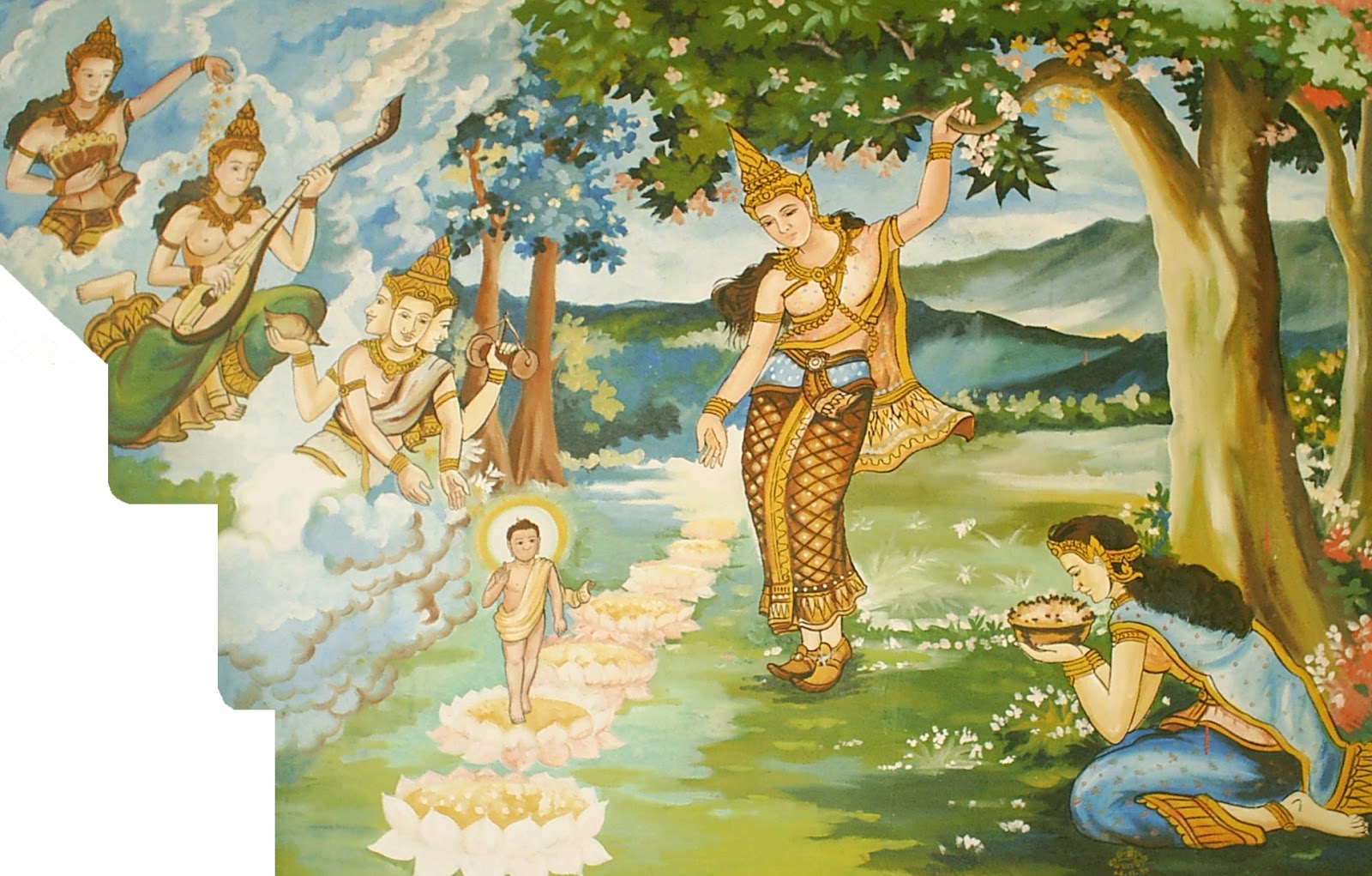
I choose to highlight the Story Birth of Siddhartha because it is the begging of the great Buddha being born. In this story, Maya the soon mother to be of Siddhartha knew here baby was about to be born. This was no ordinary with to be though. When Maya knew her baby was on the way the whole kingdom was being prepared. Everything was ordered to be of great beauty and lavished with flowers and jewels.

As the baby was born joy spread throughout the kingdom. Flowers blossomed, birds sang, swans throbbed in the air. Not only did more beauty strike but the poor became of the wealth, the wicked were cleansed of evil, the weak became strong, and the sky filled with light. This baby would be the one to see the truth.
Birth of Buddha

In the story before this, Maya's Dream she was sent a dream telling of the baby she would bear. In the dream she was informed that this baby would be a Buddha. The same thing happened but not to quit high intensity of joy being spread throughout the kingdom. The story told of how Maya became the veneration. She was able to give sight to the blind, cure the sick, and give the def back their hearing. All was well and joyful in the kingdom.


Story From: This story is part of the Buddha unit. Story source: The Life of Buddha by Andre Ferdinand Herold. (1922).